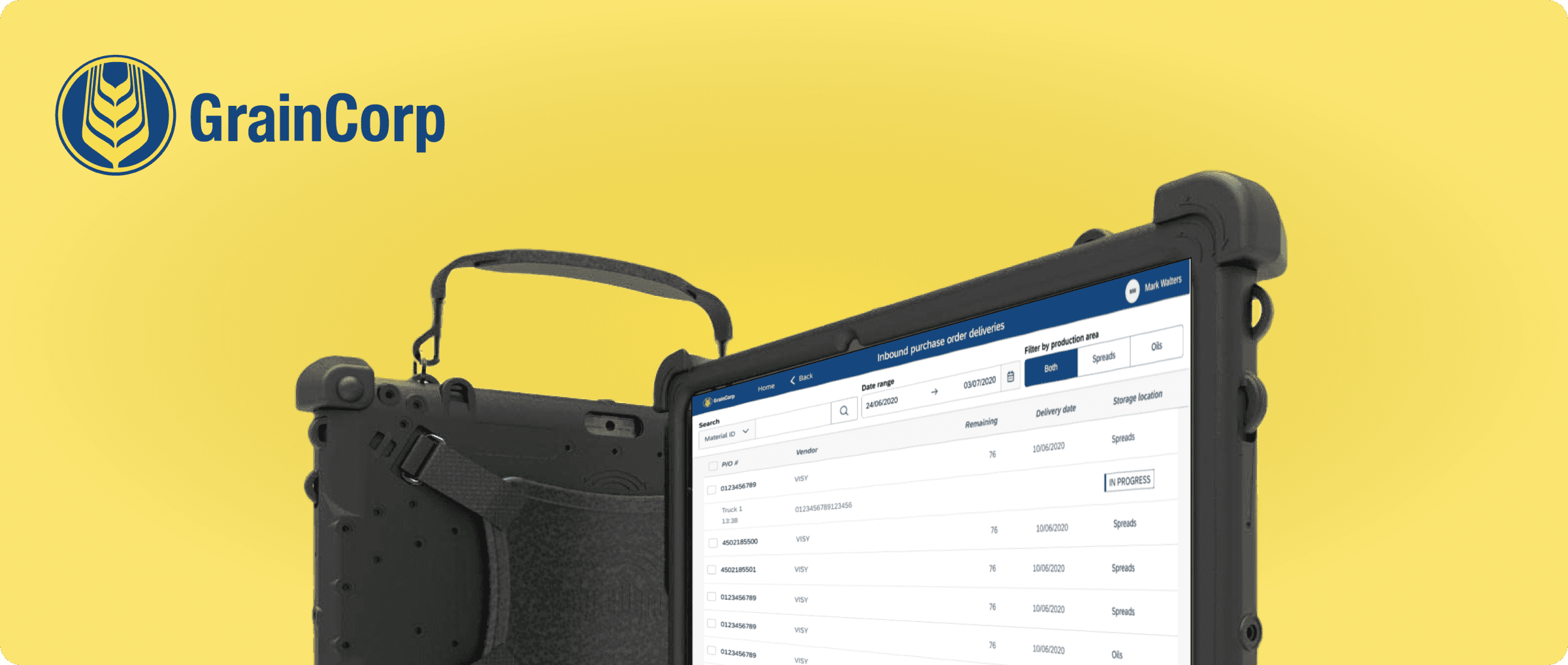
Making inbound deliveries & warehouse operations more efficient.
Summary
Context
COVID-19 restrictions required remote research and virtual walkthroughs. The goal was to improve speed and accuracy in handling stock (margarines & oils) via handheld devices and forklift-mounted tablet
Project Brief
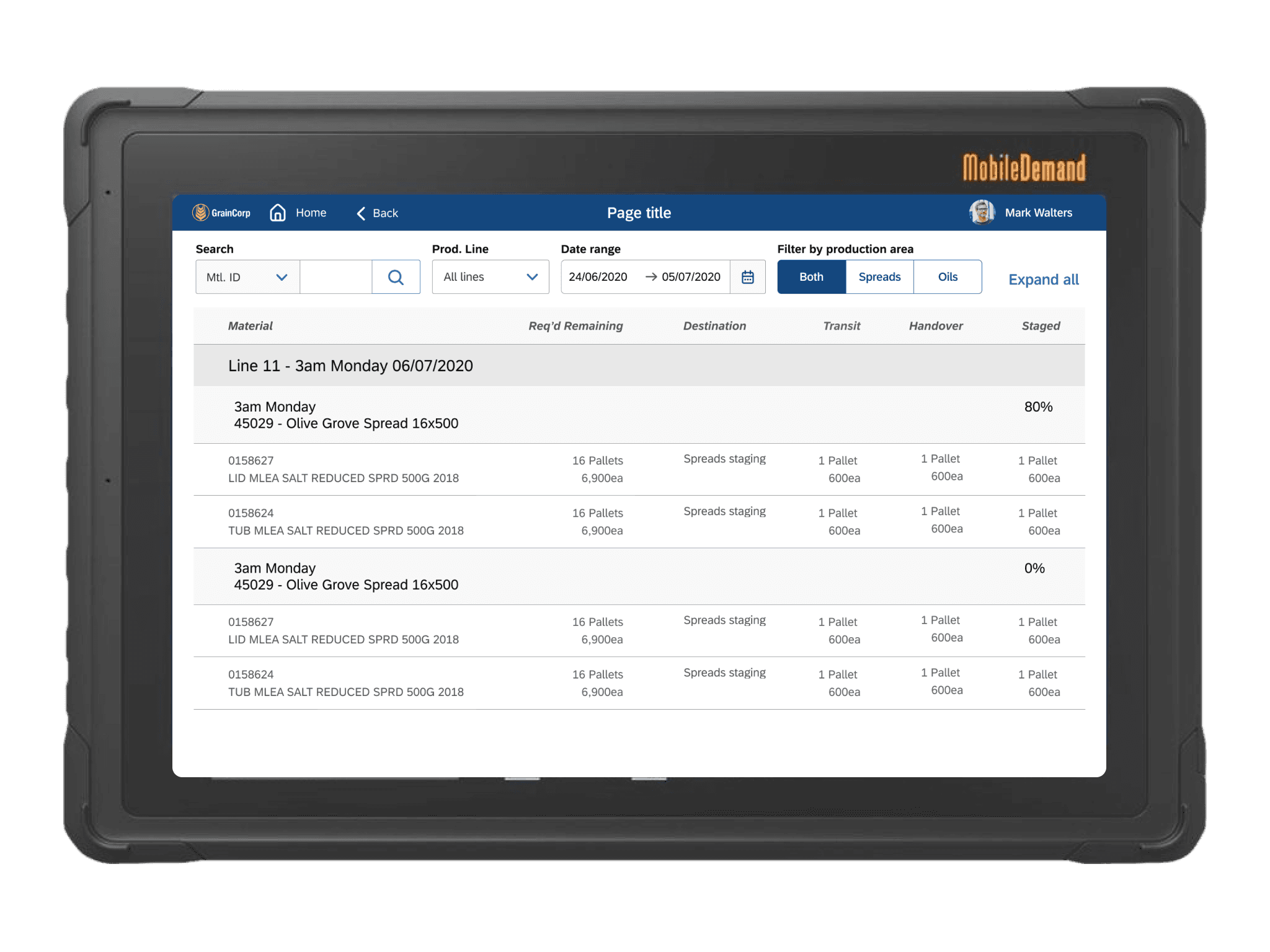
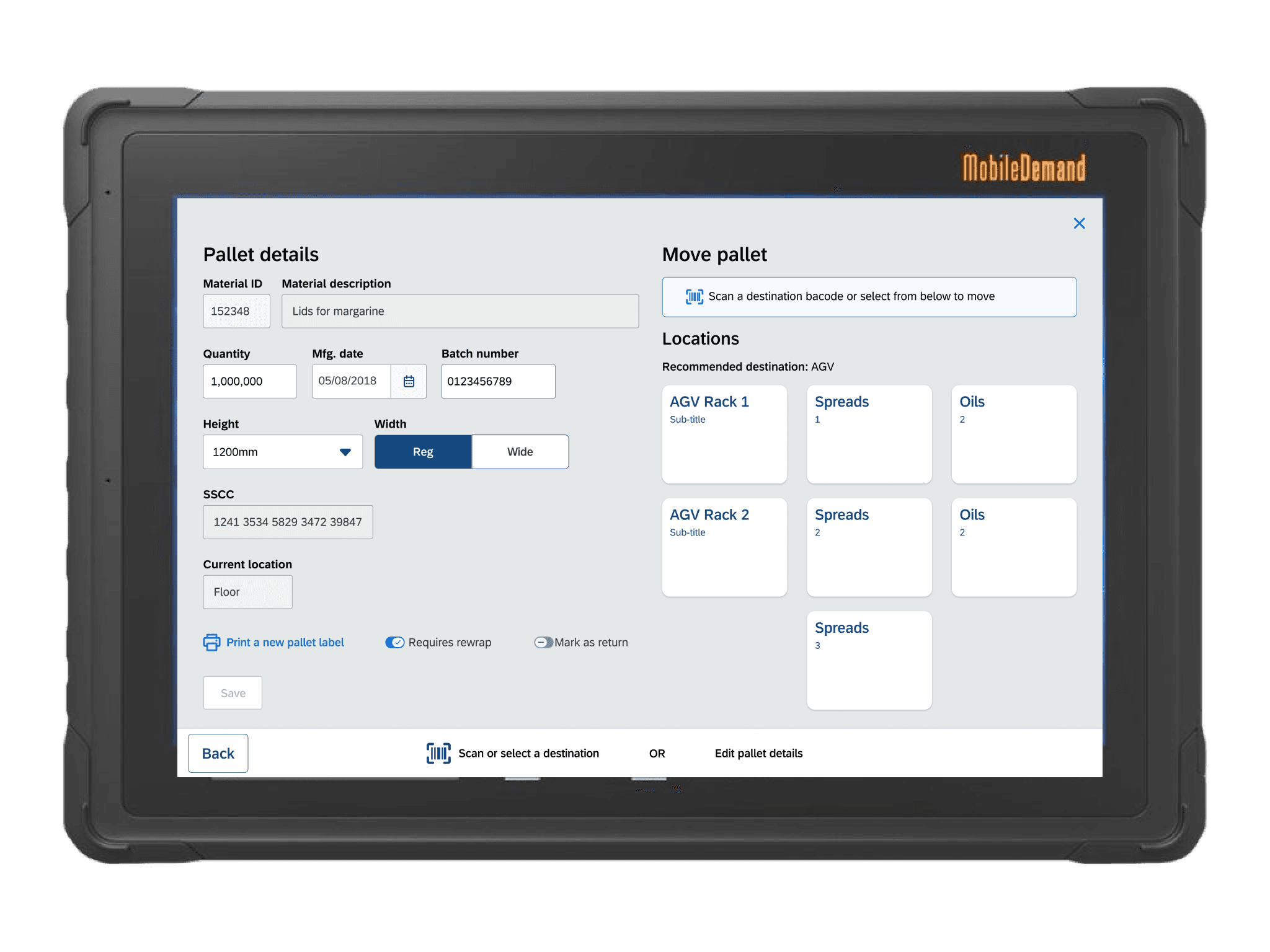
Paper-based warehouse processes (inbound to putaway, staging to production) caused inaccuracies and inefficiencies. GrainCorp needed an SAP-based Android solution for forklift drivers & warehouse staff, aiming to digitize and streamline operations.
Client
Graincorp
My role
UX Research & Design:
- Planned & conducted user research
- Mapped user journeys
- Designed UI for specialised Android devices
Timeline
3-month contract (May–July 2020) with follow-up after initial delivery
Outcomes
Cut handling times in half through automated scanning and real-time validationReduced error rates, boosting accuracy across multiple warehouse sitesBroad adoption led to quick expansions beyond the original West Footscray location
Approach
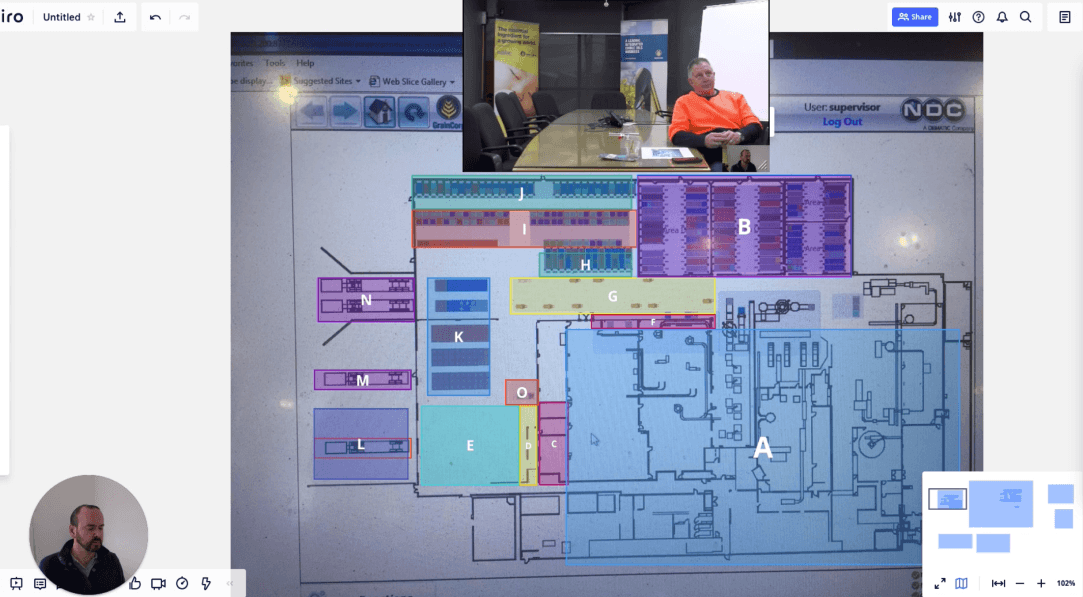
On-Site Observation & Remote Adaptation
What struck me immediately was the volume of paper. Every inbound delivery, every putaway run, every staging step had its own form — and the workarounds operators had built around them were as complex as the official process. Remote observation also revealed something I wouldn't have anticipated on-site: the automated forklift systems had their own logic that the manual processes had quietly adapted to over years. Understanding that dependency shaped everything that followed.
User Flows & Wireframing
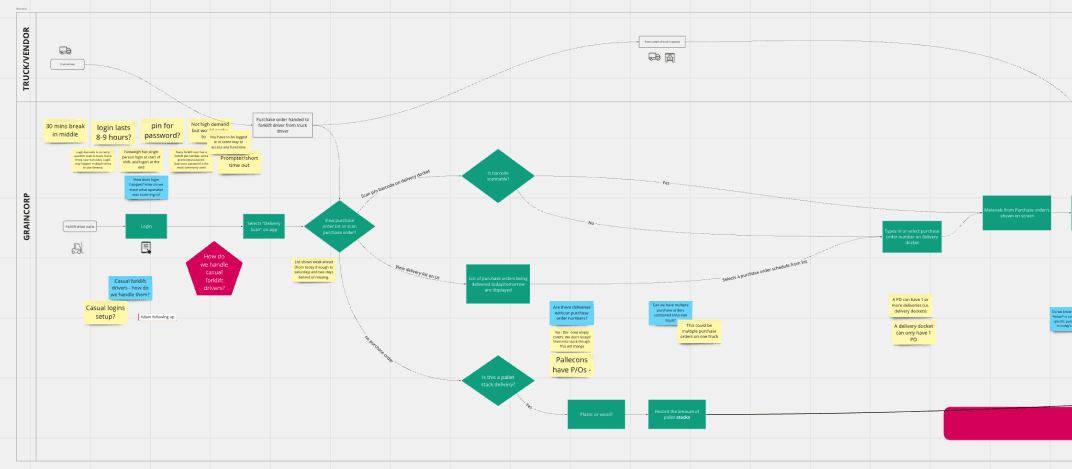
I was originally scoped for wireframes only. I pushed for full interactive prototypes built on the SAP Fiori design system and Sketch library - because I knew that forklift operators and warehouse leads needed to feel the flow, not just review static screens. Inbound and outbound processes were different enough to warrant separate flows, and we mapped each one with operators at every step to catch the informal rules that never made it into any documentation.
Iterative Testing
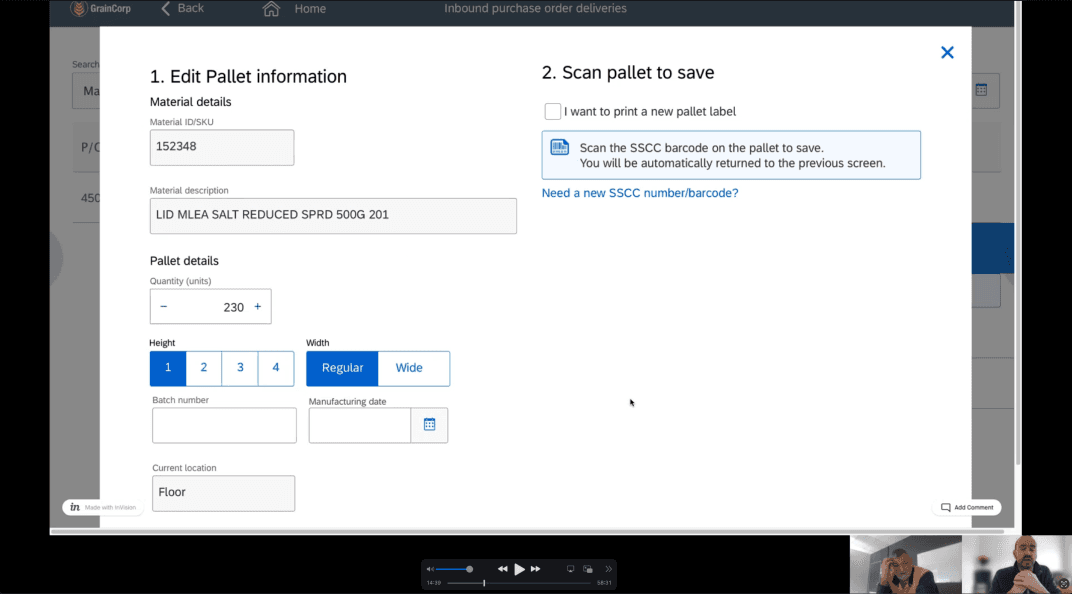
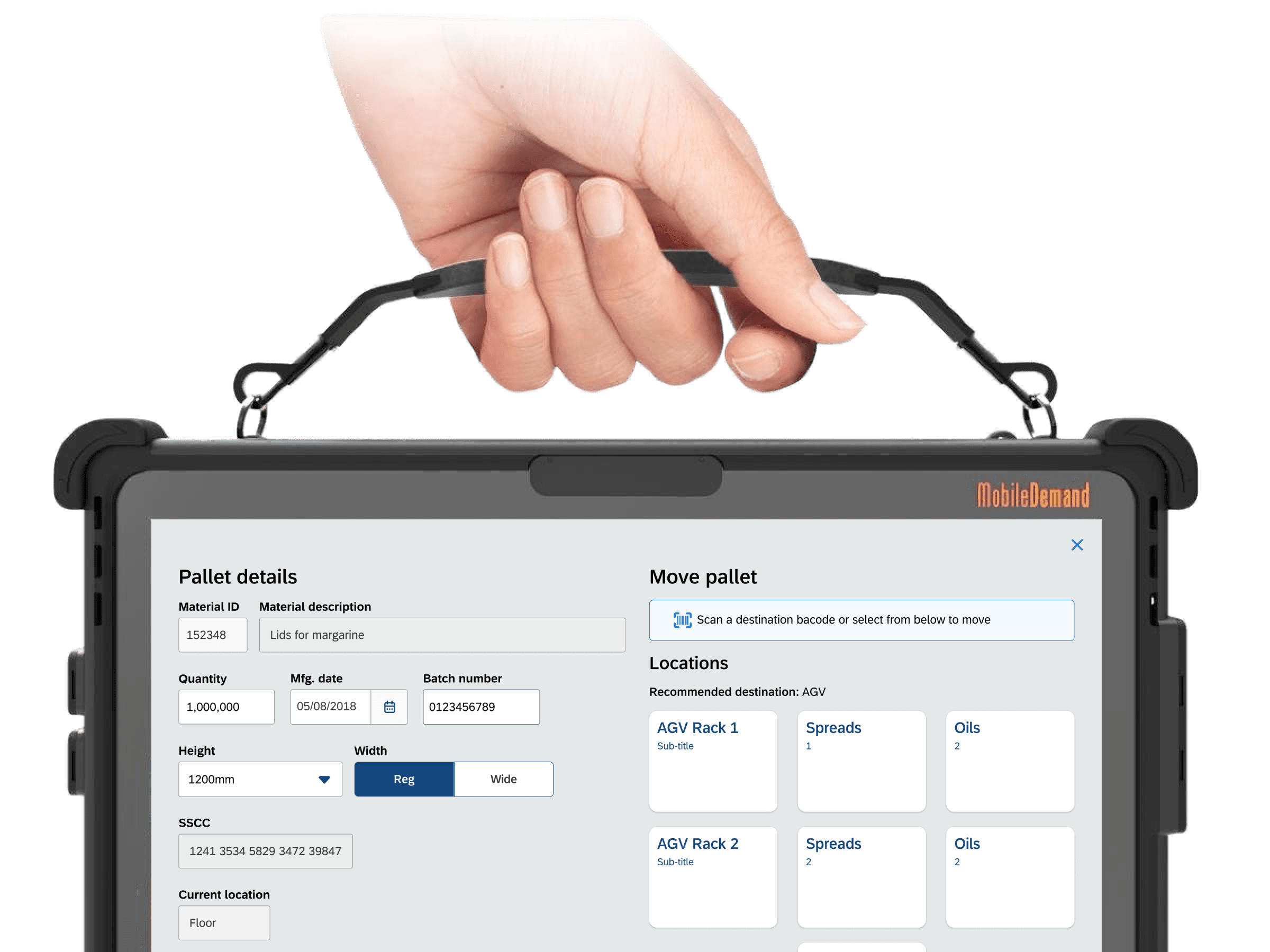
Testing on Zebra handhelds and MobileDemand tablets was less about catching design failures and more about getting the language right. The warehouse floor has its own vocabulary - placement names, zone labels, process steps - and getting that wrong in the UI was a real trust problem with operators. We iterated quickly on naming and labelling until the interface reflected how the team actually talked about their work.
Handoff & Expansion
After final design reviews with the Head of UX and engineers, we handed over Sketch files and user journey PDFs. The successful pilot spurred GrainCorp to extend the solution to additional sites, confirming our approach could handle larger-scale operations.