Reimagining Aged Care:
A Clear Path to Support & Services
Summary
Client
Uniting NSW/ACT
My role
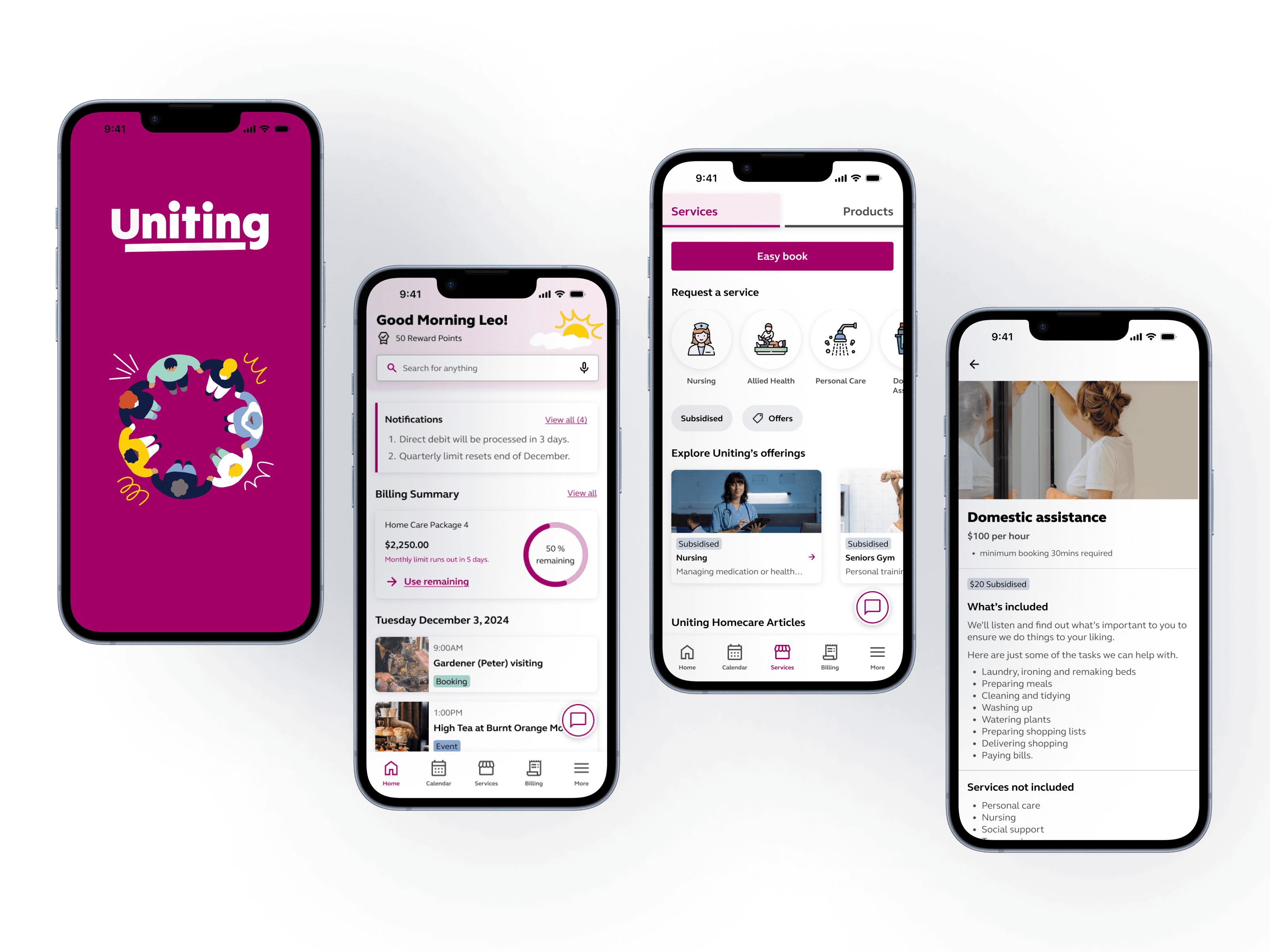
Rapid Prototyping: Created an interactive prototype to showcase core concepts to Uniting’s leadership team
UX Research: Investigated the existing flow of home care package allocations and financial tracking, focusing on user-friendly transparency
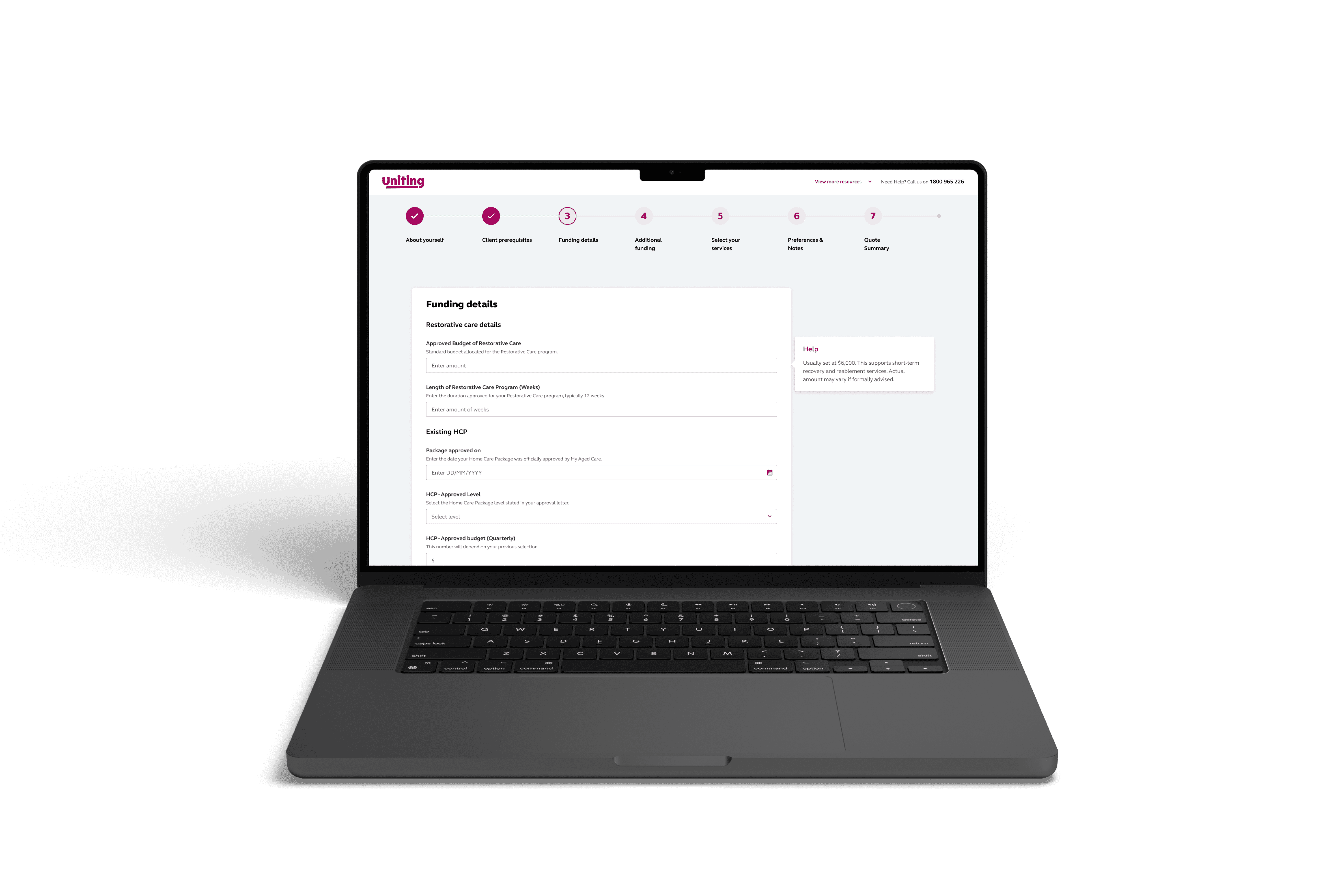
Conceptual Design: Designed key screens for billing, booking, and compliance to align with upcoming regulations in aged care
Timeline
3 weeks
Context
What struck me first wasn't the design problem — it was the absence of technology entirely. Sign-up, care booking, financial management - almost all of it was paper forms or phone calls. A third-party system handled HACC bookings, but beyond that, the operational infrastructure was largely manual. Layered on top of that was the government funding model: complex, opaque, and deeply stressful to navigate for people who were often entering aged care not by choice, but because something had gone wrong in their lives.
Project Brief
Validate early concepts for an aged care home-care package application under new legislative requirements
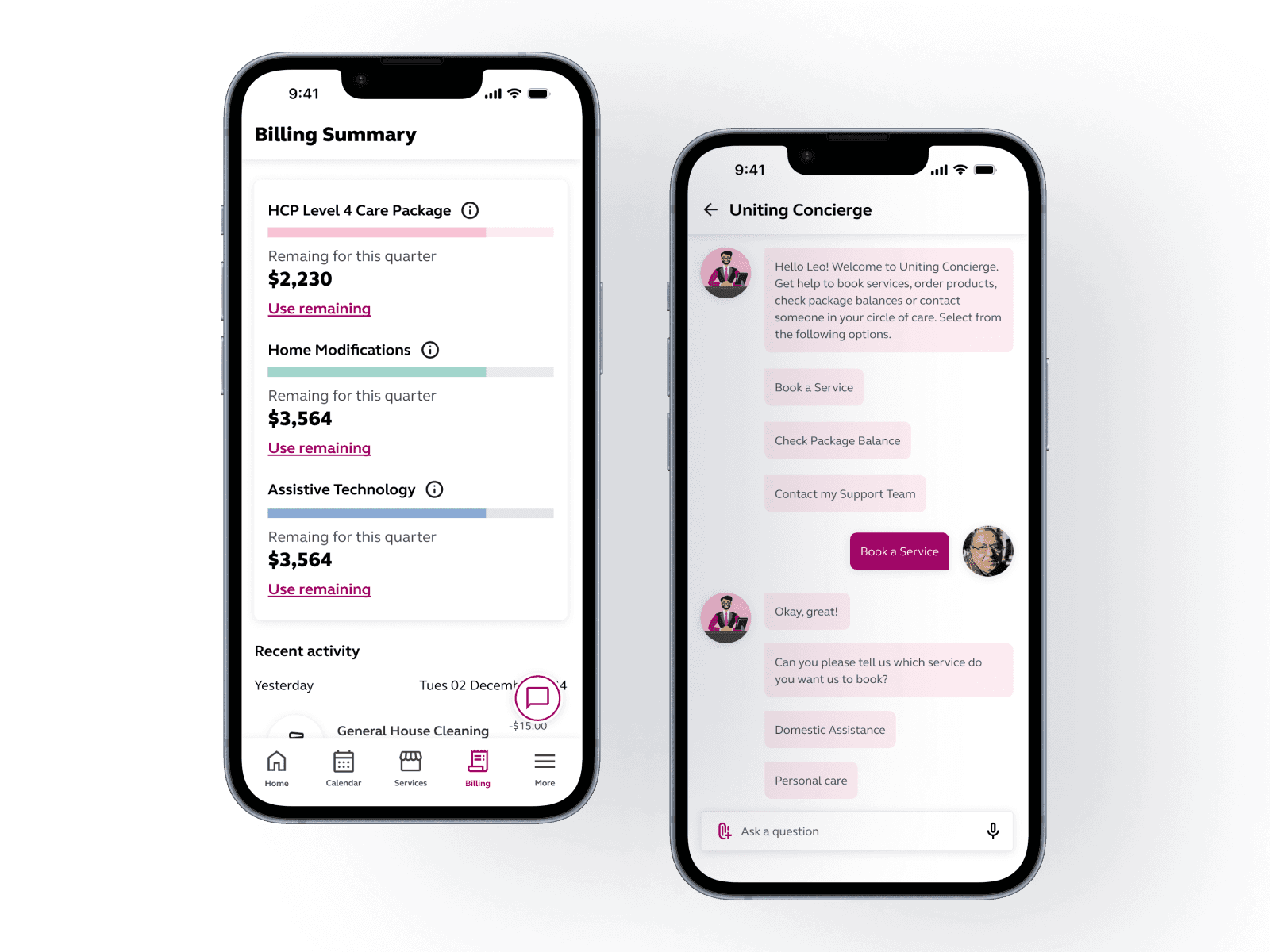
Improve transparency of billing and finances around government- funded home care packages
Enable easier service booking for older Australians receiving in-home support
User-Centric Exploration
Even in a short timeframe, I conducted brief user research to understand how billing confusion and scheduling complexity impacted older adults. Using these insights, I drafted initial sketches showing how a consolidated dashboard could bring transparency to finances and daily service appointments.
Outcomes
Approach
Context & Constraints
Upon joining Uniting, I discovered strict timelines driven by new legislative changes in aged care. This meant the prototype had to demonstrate compliance and user value simultaneously. I began by mapping HACC requirements and discussing pain points with internal experts.
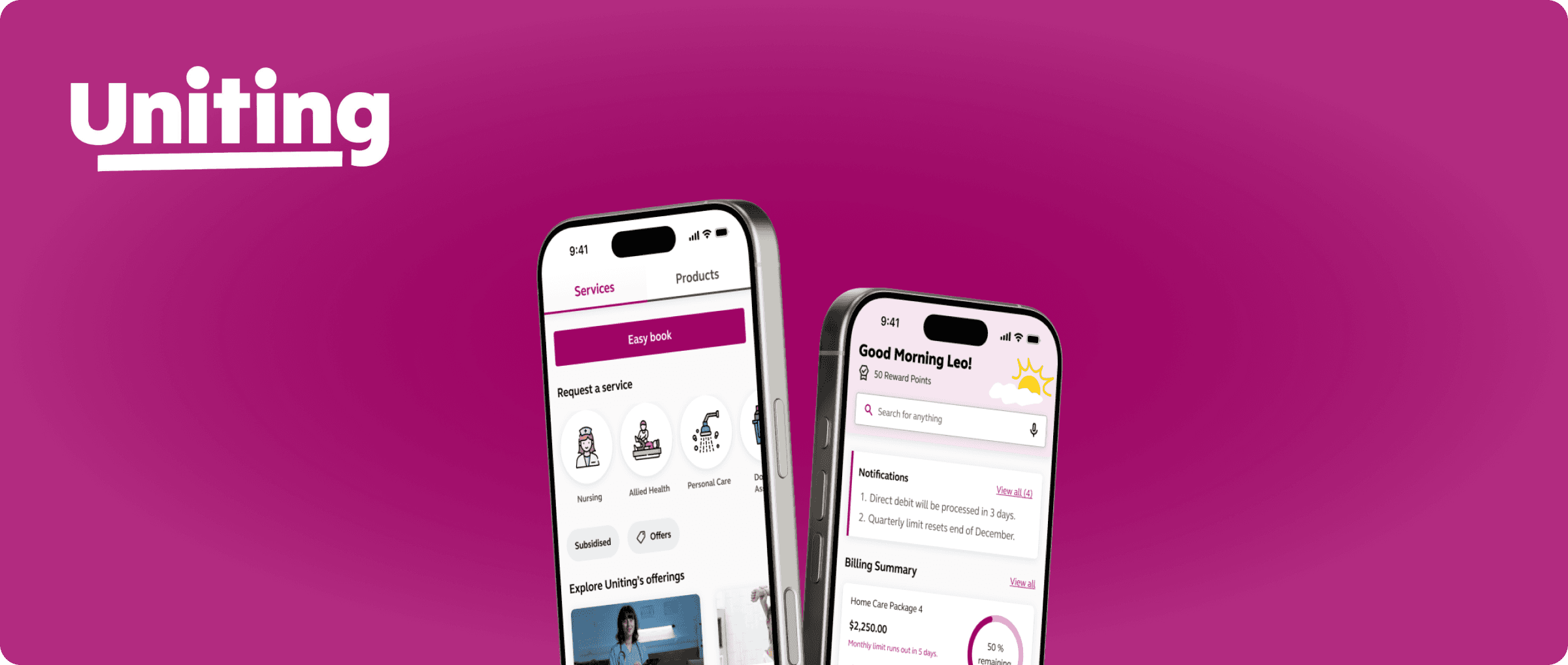
In three weeks I designed a consolidated dashboard covering home care package finances, service booking, and compliance - built as a north star vision for what the ELT believed the product could eventually become. The prototype did its job: it secured leadership approval and gave the business a shared picture of the direction.
Looking back, the hardest call wasn't a design decision — it was a research gap I couldn't close in the time available. I had no way to verify what was technically or operationally feasible. Some of what I designed turned out not to be achievable. Presenting a vision to leadership without that validation was a limitation I only fully understood later - and it's shaped how I approach discovery ever since.